

This article was originally written in December 2024 and has since been updated with new discoveries and research in January 2026.
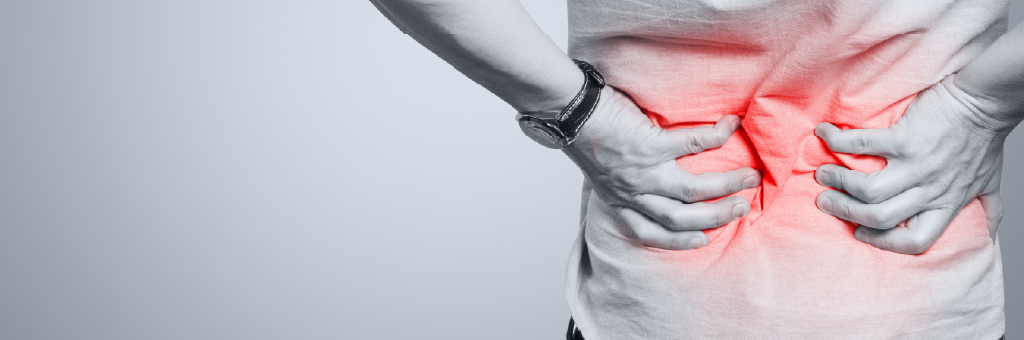
When people ask, “How does red light therapy work for pain?” they are usually looking for a way to feel less stiff, less sore, and more able to move through their day. Instead of numbing discomfort, red and near-infrared light are said to help the body do what it already wants to do: restore balance and recover.
This article walks through how light interacts with your cells, why it is often described as supporting comfort and recovery, and how to build safe, realistic at-home routines. You will see phrases like photobiomodulation for pain relief or near-infrared light therapy online; here, we translate those into plain language so you can decide whether and how to integrate a panel into your own routine.
What red light therapy is and why people use it for comfort and recovery
Before you tweak settings or calculate red light therapy dosage for pain, it helps to understand what the technology actually is. Red light therapy uses specific wavelengths of visible red and near-infrared (NIR) light, delivered by LEDs, to interact with your skin and underlying tissue. In research settings, this is called photobiomodulation (PBM), which simply means “using light to influence biology.”
At home, people explore red light therapy for pain relief when dealing with daily stiffness, post-workout soreness, lingering tightness after long commutes, or discomfort from everyday strain.
Searches like red light therapy for chronic pain, red light therapy back pain, or red light therapy muscle soreness often reflect this very human desire to move through life with fewer limitations, even when the underlying cause has not been medically diagnosed.
The key distinction is this: PBM is not about masking sensations, as a topical cream or a pain pill might. Instead, it is discussed as a way to support the body’s own recovery environment over time. That requires repetition. One long session will not undo months or years of tissue stress, but short, consistent use can become a reliable part of your recovery toolkit.

How red and near-infrared light support recovery at the cellular level
Once you know what PBM is, the next question is what is happening in your cells. Most of modern science focuses on mitochondria, the tiny structures that act as energy factories for your cells. When red and NIR wavelengths reach these mitochondria, they interact with light-sensitive molecules and can support more efficient energy production (ATP).
You may see phrases like red light therapy, mitochondria, or ATP production red light therapy in research summaries. The idea is that, by nudging these energy pathways, cells in stressed tissue have more fuel available for normal repair tasks such as rebuilding proteins and managing oxidative stress. That is one of the core ways photobiomodulation for pain relief is discussed in the literature.
Another important piece is nitric oxide red light therapy. Some nitric oxide can bind to mitochondrial machinery, slowing energy production. Red and near-infrared light have been shown to help release that nitric oxide so oxygen can take its place. This supports vasodilation, which is the widening of blood vessels, and contributes to healthier localized circulation.
A simple way to picture it is to think of circulation and red light therapy as a cleanup crew. When more blood can flow through a stressed area, it can carry oxygen and nutrients while carrying away metabolic byproducts associated with discomfort. PBM is not a cure or a direct pain treatment, but it may signal your biology to clear the way for recovery.
Circulation, sensitivity, and recovery support
If you have ever had a sore knee, tight lower back, or tender shoulder, you have felt your body’s inflammatory response at work. Inflammation and sensitivity are part of a normal repair cycle, not a simple “on or off” switch. Modern PBM research often examines how low-level LED light therapy protocols can help tissues move from a pro-inflammatory, stuck state back toward resolution.
When circulation improves, more nutrients and immune cells can reach the area, and waste products are cleared more efficiently. In this context, red light therapy swelling, stiffness, and sensitivity are usually framed as byproducts of tissue stress that may respond over time when the underlying environment is better supported.
This is part of the reason you see interest in red light therapy joint pain, red light therapy arthritis pain, red light therapy fibromyalgia, and red light therapy neuropathy. Science does not say a panel cures these complex scenarios. Instead, it explores how PBM may modulate inflammatory markers and cellular energy in ways that people hope will translate into easier movement and less day-to-day discomfort.
Red and near-infrared light depth mapping and coverage
Understanding depth is one of the most useful ways to think about PBM. Rather than saying that light “penetrates” to a specific number of millimeters, it helps to treat each wavelength as having a typical depth range and role.
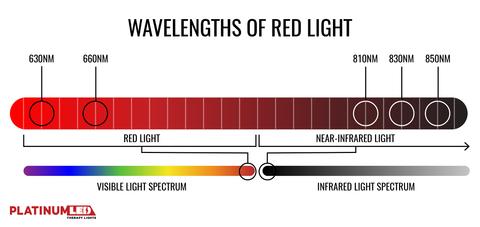
Red light around 660 nanometers interacts mostly with the skin surface and shallow structures. This is where sensations like tight fascia, superficial tendons, or surface-level sensitivity are most influenced. Near-infrared light, around 850 nanometers, falls within what researchers call the optical window, where it can travel more deeply into muscle and joint tissue.
When you see references to 660 and 850 nm, that is the classic “two-band” approach. BIOMAX PRO goes further with a patent-pending 7-wavelength stack that includes multiple red and NIR lines (with 810 nm as a key anchor) plus 1060 nm for deeper-spectrum coverage.
In practical terms, that broader spectrum supports layered dosing across surface and deep tissue, and it gives you more control to match the session to the body area instead of forcing every use case into the same two wavelengths.
Biological scenarios people explore red light therapy for
Even without diagnostic labels, certain biological patterns recur in real-world use. Instead of thinking in terms of diseases, it can be more helpful to look at cycles of stress and recovery in the body.
The cycle of stagnation
Low cellular energy can start a “guarding” pattern. Muscles tighten around a stressed area, circulation slows, and you feel ongoing stiffness or a dull ache. Over time, that guarded area may be where people first experiment with PBM, especially if they have searched for ideas about red light therapy for tendonitis, red light therapy for acute injury, or long-standing joint tightness.
By supporting mitochondrial function and circulation in that region, PBM is often positioned as one tool to help break this cycle of stagnation. Light does not manually stretch the muscle or mobilize the joint, but it can be used alongside movement and other therapies to optimize the tissue environment for recovery rather than ongoing protection.
Activity and overuse recovery
The second common pattern is simple overuse. Long runs, heavy lifts, new exercise programs, or even a weekend of yard work all create micro-stress in muscle fibers and connective tissue. That is why terms like red light therapy, muscle soreness, or red light therapy back pain are so common in forums.
Here, repeated PBM signaling is discussed as a way to support normal post-activity repair. Short sessions after exercise may fit into the same routine as stretching, hydration, and sleep hygiene. Rather than treating pain directly, the goal is to give your body repeated, gentle inputs that nudge it toward better recovery over time.
Using red light therapy at home for recovery-focused routines
Once you understand the “why,” the practical question is how to use a panel safely and consistently. A smart at-home approach focuses on distance, treatment time, and frequency, with a clear emphasis on time-efficient dosing.
A helpful starting point for most high-output panels is:
- Distance: For deeper tissue support, position yourself roughly 8 to 14 inches from the LEDs. For surface-level or facial work, stay farther away (around 16 to 24 inches) to avoid over-saturating the skin.
- Session length: Many users do well with shorter sessions on higher-powered devices. The goal is to reach an effective dose without unnecessary exposure. With BIOMAX PRO, that often means you can get comparable dosing in significantly less time than traditional panels.
- Frequency: Start with 3 sessions per week and work up to 3 to 5. Avoid treating the same area multiple times per day. Consistency beats stacking.
These guidelines connect directly to red light therapy dosage for pain because moving closer, increasing session time, and increasing frequency all raise the total dose. Efficient dosing is not just convenient; it is a safety advantage that makes routines easier to sustain.
Pulsing, irradiance, and managing thermal load
As panels get stronger, managing heat and comfort becomes more important. BIOMAX PRO treats pulsing as a practical safety and usability feature, not a gimmick. Adjustable pulsing (0 to 990 Hz) helps manage thermal load by cycling delivery, which can make deep-tissue sessions more comfortable at closer distances without pushing the skin toward overheating.
Just as important, BIOMAX PRO pairs pulsing with individual wavelength control. That means you can dial down or turn off specific bands based on sensitivity, goals, or skin concerns, instead of accepting a fixed spectrum every time. Together, pulsing and wavelength control make it easier to stay consistent, stay comfortable, and stay inside the PBM action zone.
How long it may take to notice changes and how to track progress
PBM works more like strength training than like a topical anesthetic. One workout does not transform your strength, and one light session does not usually transform long-standing discomfort. Many studies on low-level light therapy use multi-week or multi-month protocols to explore outcomes related to discomfort or function.
For most people, a realistic red light therapy results timeline looks something like this:
- First 1 to 2 weeks: You are in the “bio-priming” phase. You may notice warmth, a sense of relaxation in the treated area, or occasional temporary sensitivity as your body adapts. Success here is simply sticking with your plan and learning your tolerance.
- Weeks 3 to 6: You may begin to notice changes in how quickly you bounce back from activity. Many users focus on metrics like less lingering muscle tightness after workouts or more comfortable mornings after desk-heavy days.
- Months 2 to 4 and beyond: Any structural shifts, such as changes in mobility, endurance, or how easy it feels to maintain daily movement habits, tend to emerge here. That is why consistent routines matter more than occasional high-intensity sessions.
When tracking your own response, look beyond a simple 0-to-10 pain score. Journal changes in range of motion, how often you feel the need to modify workouts, sleep quality, and energy. These markers provide a more complete picture of how your body responds to photobiomodulation for pain relief over time.
When red light therapy may not be appropriate
Even though red and near-infrared light are generally considered low-risk when used properly, there are times when caution or medical guidance is essential. If you experience sudden, severe, or unexplained discomfort, rapid swelling, visible deformity after an injury, or systemic symptoms like fever or shortness of breath, your first stop should be a qualified healthcare professional, not a light panel.
People who are pregnant, have a history of seizures, are using medications or skin products that increase light sensitivity, or have implanted electronic devices should talk with their clinician before starting or changing a PBM routine. Those conversations help tailor general red light therapy safety guidelines to your specific situation.
Ultimately, awareness and restraint are part of safe use. Light can be a powerful input, and layering it on top of unresolved medical issues without guidance is not a shortcut.
What to look for in a red light therapy panel for recovery-focused use
Not all panels deliver the same energy or control, which is why objective benchmarks matter. Start with safety credentials. ETL Listed panels have been evaluated for electrical and fire safety by a Nationally Recognized Testing Laboratory, with ongoing factory audits.
BIOMAX PRO is also manufactured under an FDA Class II medical device listing as an infrared therapeutic heating lamp (product code ILY), which signals medical-grade manufacturing expectations rather than consumer-gadget ambiguity.
Next, look for verified performance. Independent lab testing (including integrating-sphere measurement) should confirm spectrum accuracy, stable irradiance across the treatment field, and electrical quality such as low THD and low current distortion, which reduces flicker-related discomfort.
Finally, prioritize uniformity and control. A large, even treatment field and the ability to adjust wavelengths and pulsing are what turn “red light” into a recovery system you can trust.
Building a consistent recovery routine with red light therapy
Putting it all together, red and near-infrared light are best understood as biological signals, not magic spot treatments. When you use PBM consistently and thoughtfully, it may support cellular energy and circulation, as well as the body’s normal inflammatory resolution process, which together can translate into more comfortable movement over time.
A simple three-step starter framework looks like this:
- Choose the right tool: Select a panel with accurate red light therapy wavelength 660 850 coverage and verified output, especially if you are interested in large muscle groups or joints.
- Set a realistic schedule: Aim for 10 to 20 minutes per area, 3 to 5 times per week, adjusting only one variable at a time as you learn how your body responds.
- Integrate with your life: Use sessions on movement, sleep, and stress-management habits so your system can take full advantage of the signals you provide.
If you are curious whether a panel belongs in your routine, reviewing the data-driven specs on PlatinumLED systems is a practical next step. From there, you and your healthcare provider can decide how to weave PBM into a plan that respects your history, your goals, and your day-to-day reality.
Medical disclaimer: This article is for general informational and educational purposes only. It is not intended as medical advice, diagnosis, or treatment, and it does not replace a one-on-one relationship with a qualified healthcare professional. Always consult your physician or other licensed provider before starting, changing, or stopping any wellness or recovery routine, especially if you have a medical condition, take medications, or are pregnant.
